
What Is Insulated Plasterboard?
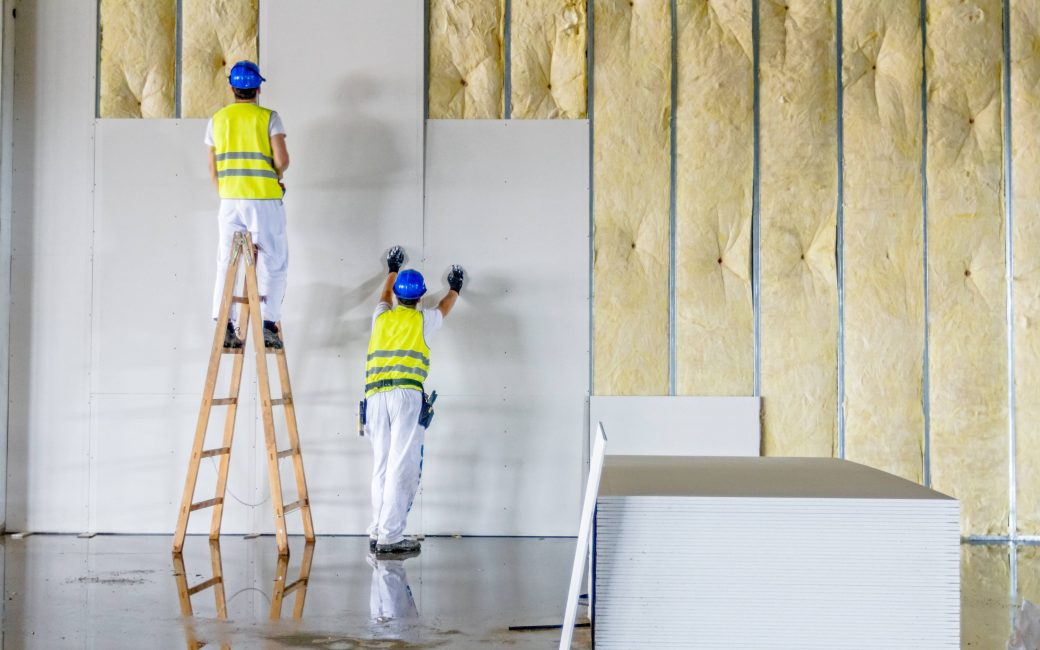
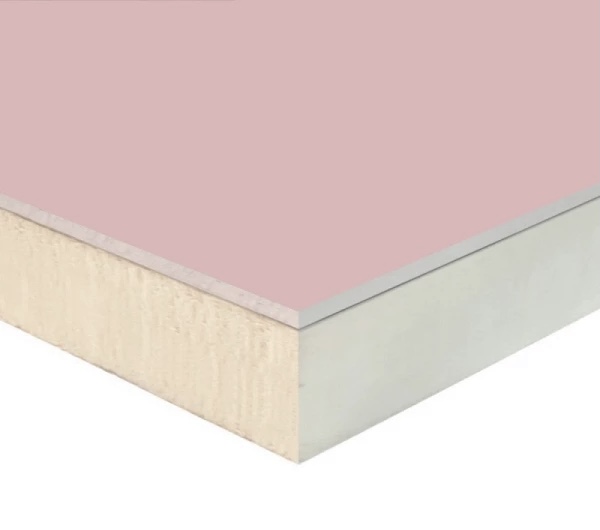
Insulated plasterboard is a two-in-one building product. It combines a layer of rigid insulation with a standard sheet of plasterboard, all bonded together into one board. In Ireland it is also called a warmboard, thermal board, or dry lining board.
Instead of fitting insulation and plasterboard separately, you fix one board to the wall and the job is done. This saves time, reduces labour costs, and helps your home meet Irish building regulations for thermal performance.
It is used in homes, apartments, offices, and schools across Dublin, Cork, Galway, Limerick, and every other county in Ireland.
How Much Does Insulated Plasterboard Cost in Ireland in 2026?
Prices vary by board type, thickness, and supplier. Here is a simple guide to what you can expect to pay in 2026.
EPS (Expanded Polystyrene) Insulated Plasterboard — Budget Option
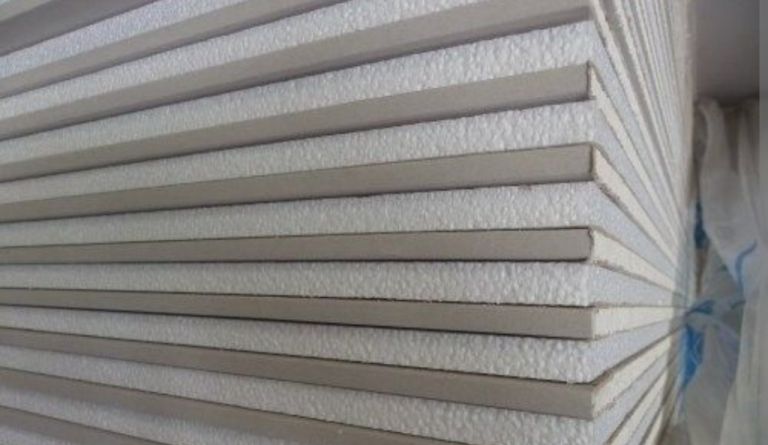
They use polystyrene foam bonded to 9.5mm plasterboard and are ideal for window reveals, ceilings, and light internal wall insulation.
- 30mm EPS board: approximately €19 to €25 per board (incl. VAT)
- 40mm EPS board: approximately €25 to €35 per board (incl. VAT)
Brands include Gyproc ThermaLine Basic and Knauf EPS Thermal Laminate.
PIR (Polyisocyanurate) Insulated Plasterboard — Best Performance
PIR boards offer the best thermal performance for their thickness. They use rigid foam insulation bonded to 12.5mm plasterboard and are the most popular choice in Ireland for internal wall insulation on external walls.
Based on current Irish supplier pricing (Goodwins, Tadhg O’Connor, MyBuildingSupplies.ie):
- 27.5mm PIR board: from approximately €46 to €57 per board (incl. VAT)
- 37.5mm PIR board: from approximately €57 to €70 per board (incl. VAT)
- 52.5mm PIR board: from approximately €68 to €88 per board (incl. VAT)
- 62.5mm PIR board: from approximately €79 to €100 per board (incl. VAT)
- 72.5mm PIR board: from approximately €88 to €120 per board (incl. VAT)
All standard boards are 2400mm x 1200mm. Bulk orders attract significant discounts — always ask your supplier for a trade price if buying 10 boards or more.
Brands include Unilin (formerly Xtratherm) Thin-R Thermal Liner, Xtratherm XT/TL, Kingspan K118, and Celotex PL4000.
Moisture-Resistant PIR Insulated Plasterboard — Kitchens & Bathrooms
For wet areas like kitchens, bathrooms, and utility rooms, choose a moisture-resistant (MR) variant. These have a green-faced plasterboard core that resists humidity. Prices are typically 10–15% higher than standard PIR boards.
Quick Answer: What Is the Cheapest Insulated Plasterboard in Ireland?
EPS insulated plasterboard is the cheapest option in Ireland, starting from around €19 to €25 per board (incl. VAT) for a 30mm board. For better performance without a massive price jump, a 27.5mm PIR board starts from around €46 incl. VAT and is the most popular choice among Irish builders and homeowners.
Where to Buy Insulated Plasterboard in Ireland
Several reputable Irish suppliers stock insulated plasterboard for trade and DIY customers:
Goodwins — one of Ireland’s best-known builders’ providers, with competitive daily pricing on Xtratherm PIR warmboards and EPS boards. Available online with nationwide delivery.
Tadhg O’Connor Ltd (TOC) — Munster’s leading building materials stockist with a strong online store. Stocks 50mm and above PIR boards with nationwide delivery. Good for bulk orders.
Brooks — a leading Irish insulation provider stocking a wide range of insulated plasterboards for residential and commercial projects.
MyBuildingSupplies.ie — stocks Unilin (formerly Xtratherm) Thin-R Thermal Liner boards with Eircode-based delivery pricing.
TJ O’Mahony — a nationwide builders’ provider supplying insulated plasterboards to contractors across Ireland, suitable for new builds and refurbishments.
MD O’Shea & Sons — Cork-based supplier with competitive prices and a bulk quote service.
McCarthy’s Homevalue (Waterford) — stocks various thicknesses with online ordering and delivery to Waterford and surrounding areas.
Build4Less / CORE (Dublin) — Dublin-based supplier with free delivery in Dublin on orders over €300 and fast nationwide delivery.
Pro tip: Always get at least three quotes from Irish suppliers. Prices for the same board can vary by 15–20% depending on the stockist and order size.
Types of Insulated Plasterboard — Which One Do You Need?
PIR Insulated Plasterboard The best choice for most Irish homes. PIR insulation has a very low thermal conductivity (around 0.022 W/mK), meaning you get excellent insulation in a thinner board. Best for external walls, ceilings, and sloped roofs.
EPS Insulated Plasterboard The budget-friendly choice. EPS polystyrene is less efficient per mm than PIR, so you need a thicker board to get the same result. Ideal for window reveals, internal partitions, and ceilings where full thermal performance is not the priority.
Moisture-Resistant Insulated Plasterboard Designed for kitchens, bathrooms, and utility rooms. The plasterboard core resists moisture and helps prevent damp — a key concern in Ireland’s wet climate.
Acoustic Insulated Plasterboard Combines thermal insulation with soundproofing. Useful for homes near busy roads, apartment conversions, or rooms that need both heat retention and noise reduction.
SEAI Grants for Insulated Plasterboard Installations in Ireland 2026
Installing insulated plasterboard as part of internal wall insulation (also called dry lining) may qualify you for an SEAI Better Energy Homes grant in 2026.
Current grant amounts for internal wall insulation (dry lining) as of 2026:
- Detached house: up to €4,500
- Semi-detached or end-terrace: up to €3,500
- Mid-terrace: up to €2,000
- Apartment: up to €1,500
Before the grant, internal wall insulation (including materials and labour) typically costs €4,095 to €10,532 depending on home size and complexity. After applying the SEAI grant, most homeowners pay between €2,595 and €7,032.
From 2 March 2026, a new rule allows homeowners who already received a cavity wall insulation grant to apply for an internal wall insulation grant as a second wall measure — a significant change that opens up additional savings.
To qualify for the SEAI grant:
- Your home must have been built and occupied before 31 December 2010
- Work must be carried out by an SEAI-registered contractor
- You must apply for and receive grant approval before work starts
Apply at seai.ie or through an approved One Stop Shop contractor.
Is Insulated Plasterboard Worth It in Ireland?
Yes — for most Irish homes, insulated plasterboard is a very cost-effective upgrade.
Ireland’s climate is damp and cool for much of the year. Poorly insulated walls are one of the biggest causes of heat loss in older Irish homes — especially those built before the 1990s with solid block or hollow-block walls where cavity wall insulation is not possible.
Installing insulated plasterboard helps:
- Reduce heat loss through external walls
- Lower your energy bills — less fuel needed to heat the home
- Improve your BER (Building Energy Rating) — useful when selling or renting
- Reduce condensation and damp on cold walls
- Meet Part L of the Irish Building Regulations for thermal performance
The payback period on insulated plasterboard, especially when combined with an SEAI grant, is typically 5 to 10 years through reduced heating bills.
Things to Consider Before Buying
U-Value: This measures how well the board prevents heat loss. A lower U-value means better insulation. In Ireland, building regulations require good thermal performance, so always check this before buying. PIR boards achieve lower U-values in thinner profiles than EPS.
Thickness: Thicker boards insulate better but take up more room. In older Irish homes with small rooms, a high-performance PIR board in a thinner size is often the smarter choice than a thick EPS board.
Fire Rating: Check the fire performance of the board, especially for commercial projects or multi-unit developments. Most reputable brands carry the required certifications.
Installation Method: Most insulated plasterboards are fixed using the dot and dab adhesive method. Some thinner PIR boards can also be mechanically fixed. Always follow the manufacturer’s installation guidelines.
Summary: Insulated Plasterboard Prices Ireland 2026
| Board Type | Thickness | Price Per Board (Incl. VAT) | Best For |
|---|---|---|---|
| EPS Basic | 30mm | €19 – €25 | Window reveals, ceilings |
| EPS Basic | 40mm | €25 – €35 | Budget wall insulation |
| PIR Thermal Liner | 27.5mm | €46 – €57 | Internal walls, space-limited |
| PIR Thermal Liner | 37.5mm | €57 – €70 | Internal walls |
| PIR Thermal Liner | 52.5mm | €68 – €88 | External walls (internal lining) |
| PIR Thermal Liner | 62.5mm | €79 – €100 | External walls, high performance |
| PIR Thermal Liner | 72.5mm | €88 – €120 | Maximum performance |
Prices are indicative for 2024mm x 1200mm boards. Always confirm current pricing with your Irish supplier before ordering.
For SEAI grant information, visit seai.ie. Always use SEAI-registered contractors for grant-eligible work. Prices correct as of June 2026 and subject to change
Conclusion
Insulated plasterboard is one of the smartest and most cost-effective upgrades you can make to an Irish home in 2026. Whether you are doing a full retrofit or just improving one room, it gives you insulation and a finished wall surface in a single product — saving time, money, and hassle compared to fitting them separately.
If your budget is tight, start with an EPS board for ceilings or window reveals. If you are insulating an external wall and want real results, invest in a 52.5mm or 62.5mm PIR board. The higher upfront cost pays back through lower heating bills year after year.
Prices in Ireland range from as little as €19 per board for EPS up to €120 per board for thick PIR, so there is an option for every project size and budget. With SEAI grants covering up to €4,500 for internal wall insulation on a detached home, the net cost of a full dry lining job is more affordable than most homeowners expect.
The steps are simple: choose the right board type for your wall, pick an SEAI-registered contractor, apply for your grant before work starts, and compare at least three quotes from Irish suppliers.
Frequently Asked Questions
1. How many boards of insulated plasterboard do I need for a room? Measure the total wall area you want to cover in square metres (length × height for each wall). Each standard board covers 2.88 m² (2400mm × 1200mm). Divide your total area by 2.88 and add 10% for cuts and waste. For example, a typical Irish sitting room with 20 m² of external wall area needs around 8 boards.
2. Can insulated plasterboard be used on all walls in an Irish home? Yes. It is most commonly fitted on the inner face of solid block or hollow-block external walls — the type found in the majority of Irish homes built before the 1990s where cavity wall insulation is not an option.
3. Will insulated plasterboard improve my BER rating in Ireland? Yes. Reducing heat loss through walls is one of the most effective ways to improve your Building Energy Rating (BER). A better BER makes your home cheaper to heat, more comfortable to live in, and more attractive to buyers or renters. Many Irish homeowners use dry lining with insulated plasterboard specifically to lift their BER before putting their home on the market.
4. Is PIR insulated plasterboard safe to use indoors? Yes. PIR insulated plasterboard from reputable brands like Unilin (Xtratherm), Kingspan, and Celotex meets all relevant Irish and European safety standards. The plasterboard face provides a fire-resistant layer and most products carry the necessary certifications for residential use. Always check the product datasheet and follow the manufacturer’s installation instructions.
5. How long does insulated plasterboard last? When correctly installed, insulated plasterboard has a lifespan of 25 to 40 years or more. The key to long-term performance is correct installation — particularly sealing all joints and preventing moisture from getting behind the boards.